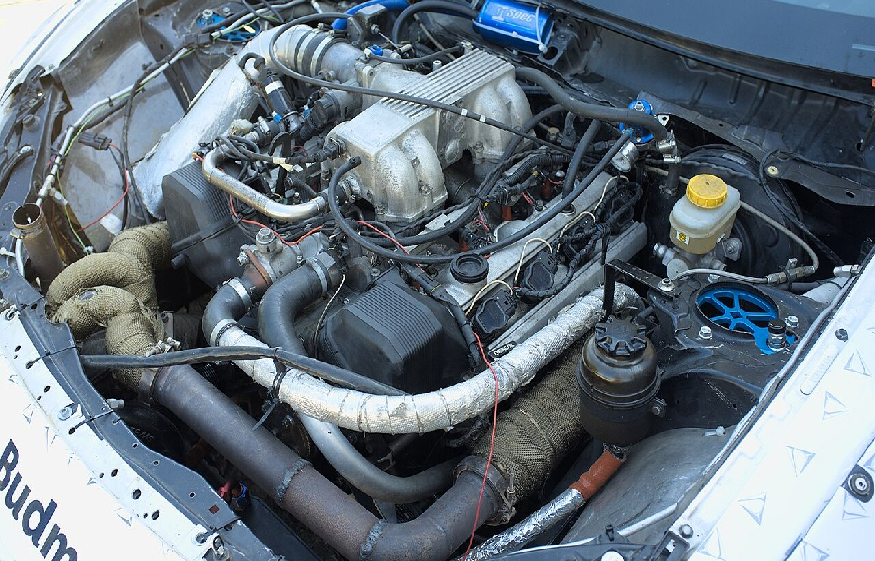
Follow one engine for a moment. Call it a Nissan VQ35DE, the 3.5-liter V6 that powered the 350Z, the Altima and the Murano. Ours starts its life in a sedan registered somewhere outside Osaka. Its owner drives it to work a few days a week, takes it to the coast in summer, and changes the oil when the dealer reminds him.
Eight years in, the car is due for another inspection. The quote comes back high. He trades it in.
The car is finished in Japan. The engine is about to start a second career on the other side of the Pacific.
A second life that starts with a paperwork decision
The reason our V6 leaves Japan has nothing to do with wear. It is shaken, the country’s mandatory inspection. A new private car gets a three-year first certificate, then must be re-inspected every two years, and each renewal brings fees, taxes and whatever maintenance the inspecting garage requires. As cars age the bill tends to rise, so many owners replace a car that would be considered middle-aged in America.
That habit feeds an entire export industry built around JDM engines. On the American side, importers buy those drivetrains and resell them to owners who need a replacement; Dallas-based Texas JDM Motors, for example, stocks engines for Toyota, Honda, Nissan, Mazda, Subaru and Lexus models. Our VQ is headed for a shelf like that.
Read More: Powering Your Adventure: Why You Need an RV Generator for Your California to Alaska Road Trip
Where a JDM engine starts its export journey
The trade-in ends up at a dismantler. These yards in Japan are often organized and fast, because export parts are a large part of their income.
The engine comes out with its accessories, usually alongside the transmission. Someone records the odometer reading from the donor car, since that number will follow the engine for the rest of its life and largely sets its price. Fluids are drained. Openings get capped or taped so dirt and water stay out. Better operations photograph the unit and note anything obvious: a cracked plastic intake, a broken sensor, signs of an accident on the front of the block.
Then it waits on a pallet with dozens of others.
Across the Pacific
Engines travel the way most heavy goods do: crated, strapped and loaded into shipping containers. Packing many units into one box is what makes the economics work, since the freight cost is spread over the whole load. The crossing takes weeks, followed by customs clearance and a truck ride to the importer’s warehouse.
This is the stretch where storage matters most. A sealed engine kept dry arrives in the condition it left. One that sat open in humid air for months can arrive with surface rust in places nobody will see until it fails.
What happens in the warehouse?
A careful importer doesn’t just unpack and list. Units get checked again. Compression testing is common, a visual inspection for cracks and leaks is standard, and the listing is matched to engine codes and the US models they fit. That last step is harder than it sounds. Japanese and American model years don’t always line up, and the same car can carry different engine codes depending on the market.
Read More: Jeff Lupient Gives a Guideline to the First Time Car Buyers
Our VQ35DE gets photographed, priced and listed for the American models that used it: Altima, Maxima, Murano, 350Z, the Infiniti G35.
The last mile
The buyer is a shop owner in Georgia with a 2006 Murano on the lift. The original engine has a failed timing chain guide and a lot of metal in the oil. He orders the import, it ships by freight to his business address, and two days of labor later the Murano is back on the road with an engine that has covered far fewer miles than the one it replaced.
That is the whole journey. A Japanese owner’s inspection bill becomes an American owner’s affordable repair, and an engine with plenty of life left avoids the crusher. Not every unit gets there in perfect shape, which is why the testing and the warranty matter. But the system works more often than not, and it keeps a lot of good cars running.